training · targets
Training targets for advanced shooters: small targets, known standards and decisions
Printable A4 targets and drills for the advanced stage: 2.5 cm dots, a card and circle for the Bill Drill and F.A.S.T., call-out shapes and a near life-size torso. Part three of a series.
3 min read ·
At this stage you're no longer practising "hitting". You're practising hitting a small target, fast, after a decision. The targets get smaller, the distances longer, and there are well-known standards with times you can compare yourself to.
This is part three of a series. Before it: beginners and intermediate.
The targets
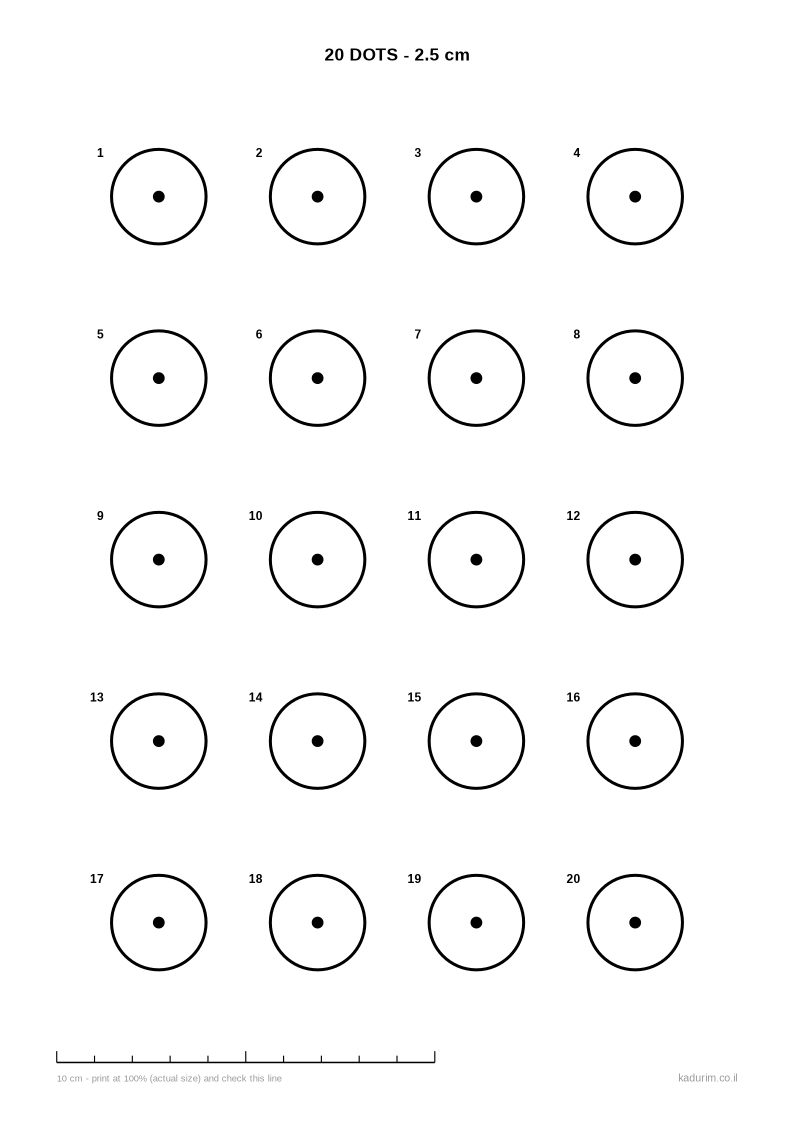
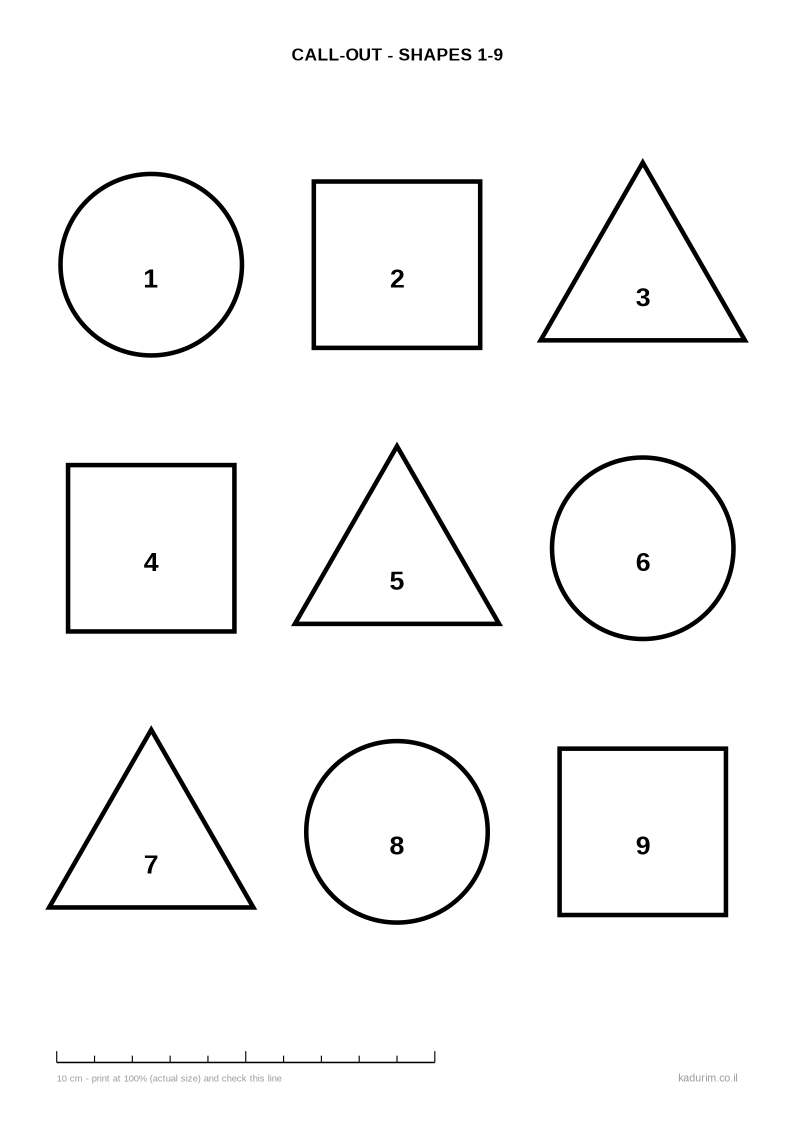
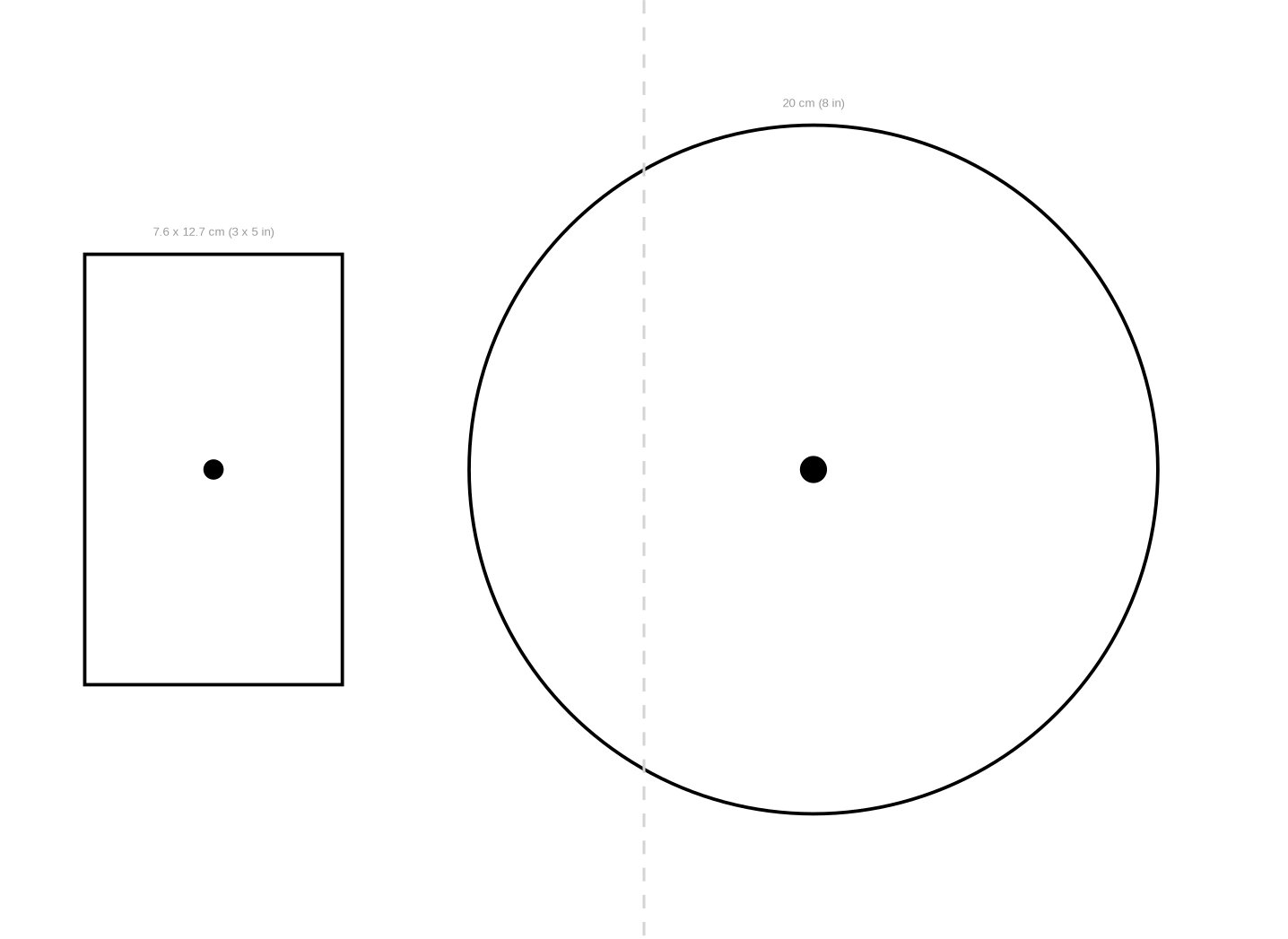
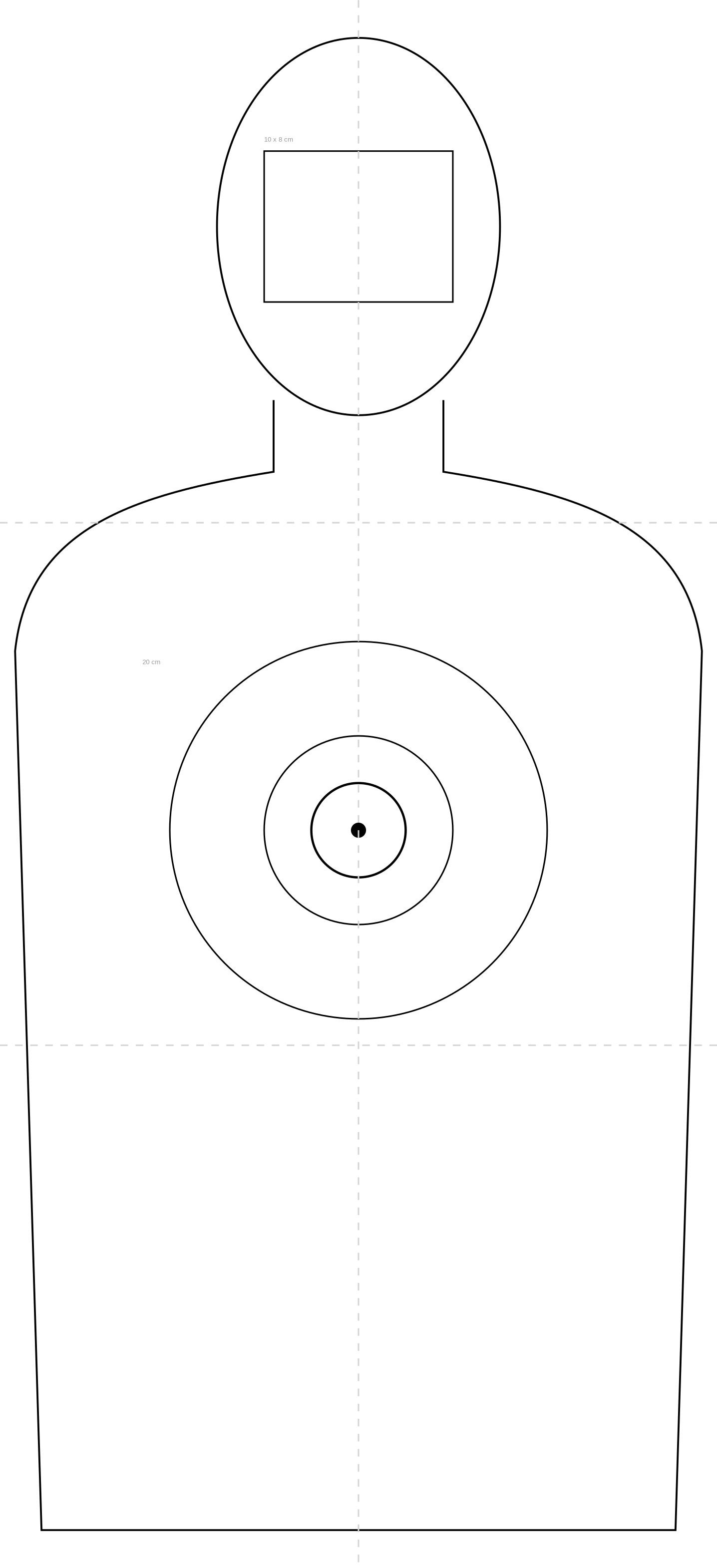
| Target | What's on it | What for |
|---|---|---|
| 20 small dots | 20 circles of 2.5 cm | Precision at distance (10–15 m) and against the clock: a small dot doesn't forgive |
| Call-out | 9 numbered shapes: circles, squares and triangles | A partner calls a number or shape; you decide and shoot |
| Card and circle | A 7.6×12.7 cm card and a 20 cm circle, on two sheets | The sizes well-known pistol standards are scored on |
| Torso | A near life-size outline, a 10×8 cm head box and chest circles, on 6 sheets | Drills on a person-sized target, from different distances |
"Card and circle" and "Torso" are made from several sheets; the instructions are on the first page of each file. Print at 100% and check the 10 cm line.
About standards and the draw
Most well-known standards start with a draw from the holster, sometimes from under a cover garment. At many ranges in Israel drawing is only allowed on certain lanes and with the range officer's approval. If it isn't allowed, start from low ready, but then your times can't be compared to the published ones: compare only with yourself.
Drills
Bill Drill (6 rounds, 6.4 m)
Six shots into the 20 cm circle, as fast as you can, from the start beep. The drill is credited to Bill Wilson, and KR Training notes that the goal he gave for a good shooter is about 3 seconds from an open-carry holster. The point: see the sights come back onto the target between shots, rather than spraying.
F.A.S.T. (6 rounds, 6.4 m)
Two shots to the card, a slide-lock reload, then four shots to the circle, all in one run. Every miss adds time. The standard was developed by Todd Louis Green, and it tests precision on a small target, a reload and speed on a large target in one go. Read the full rules and time levels at the source before you score yourself.
Call-out (30 rounds, 5–7 m)
A partner stands behind you and calls: "three", "triangle", "square, then seven". Shoot a pair on each shape called. When a shape is called and there are several, pick the one closest to where the gun already is. This trains deciding under pressure, not just shooting.
Small dots at distance (20 rounds, 10–15 m)
One shot per dot, untimed, then the same with 3 seconds per shot. How many dots in each round? Once you get 18 out of 20 from 10 meters, step back.
Torso from distances (36 rounds)
On the torso: a pair to the chest from 3, 5, 7 and 10 meters, then one shot to the head box from each distance. As you move back, the time per pair grows; see by how much.
What to write down
Best time, average and hits, for each drill. After a few sessions you see where you're improving and where you're stuck. In the Kadurim vault you log the session and each gun's round count.
Before you print: some ranges only let you shoot their own targets, or ones the range officer has approved. Ask first.
Credits
- Bill Drill: credited to Bill Wilson. The roughly 3-second goal: KR Training.
- F.A.S.T. (Fundamentals, Accuracy and Speed Test): developed by Todd Louis Green. Details: Pistol-Training.com, and a summary by Rifle Configurator.
- The 3×5 card and 8-inch circle as scoring sizes: common to many standards, including the ones above.